Process requirements
NMP-based strippers change the tank requirements.
Cold stripping systems often hide weak tank design because they are not carrying the same heat, vapor, and condensate load. Once chemistry depends on heat, the tank becomes a process system. Temperature control, overtemperature response, lid behavior, ventilation, and service access all matter.
The WL4 is designed around a 180F operating target and a 200F maximum solution temperature. It uses stainless construction, sealed control hardware, redundant probes, and a hardwired safety cutoff to support heated stripping work in industrial environments.
- Designed for heated alternative stripping chemistry
- NEMA 4X stainless enclosures for corrosive vapor environments
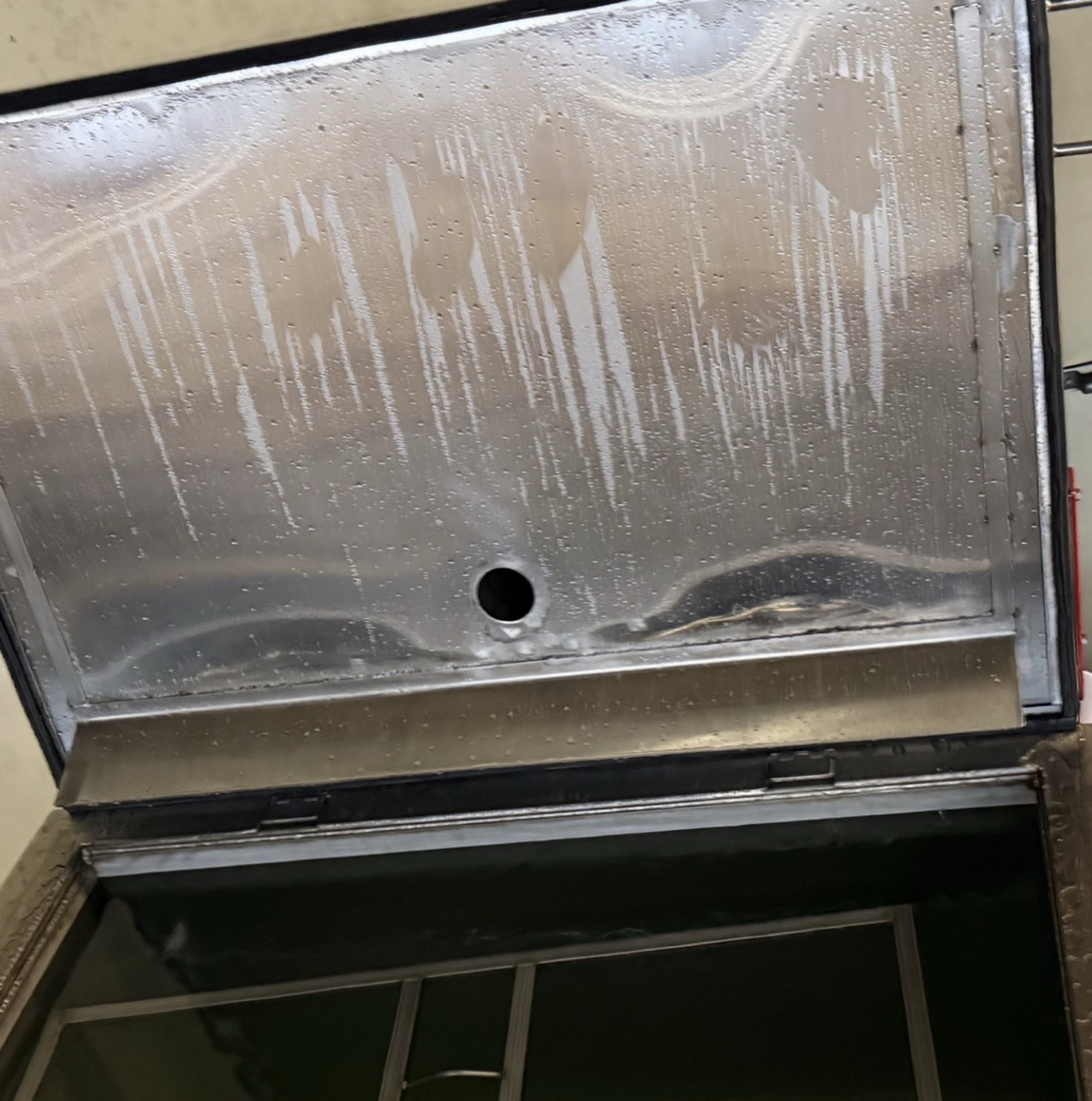
- Drip guard returns lid condensate back into the tank
- Dual drains support liquid removal and sludge service
Vapor and condensate
A heated stripping tank has to manage what leaves the liquid.
NMP-based and other heated stripping chemistries can produce vapor, steam, and condensate. Ignoring that environment can shorten control life and increase operator cleanup. The WL4 uses a center vent, sealed electrical fittings, and stainless enclosure hardware to help control the surrounding environment.
The drip guard is a small but important detail: it redirects condensate from the underside of the lid back into the tank, reducing chemical loss and mess around the tank edge.
Safety controls
Heat-dependent chemistry needs fault visibility.
A stuck solid-state relay can keep heaters energized when the controller is no longer calling for heat. A failed heater can leave the tank below process temperature while still appearing powered. The WL4 LED diagnostic system makes those states visible to operators.
Green, yellow, red, off, and flashing-red indicators give a quick read on full-load heating, degraded heating, open fault, standby, and possible stuck-SSR behavior.
Questions buyers ask
Heated strip tank FAQ
Can a heated strip tank be used with NMP-based stripper?
A heated strip tank can be used with compatible NMP-based chemistry when the tank materials, controls, ventilation, and safety practices match the chemical supplier's requirements.
Why is condensate control important with heated stripping chemistry?
Condensate can carry chemical residue. Returning it to the tank helps reduce mess, waste, and operator exposure around the lid edge.
What should shops confirm before using any chemistry?
Shops should confirm chemical compatibility, operating temperature, ventilation, PPE, disposal requirements, and local safety rules with the chemical supplier and site safety personnel.